Showing posts with label Kahnawake. Show all posts

Wednesday, March 12, 2014

Drapery and Patern


I completed the young girl a few days ago. The final touches were the pattern that graces the border of her skirt. I've adapted the pattern from a doll to which I've previously referred. Now part of the collection of the National Maritime Museum, it was made in the early 19th century at Kahnawake. The connection to St. Kateri's own village makes it very valuable to this project.

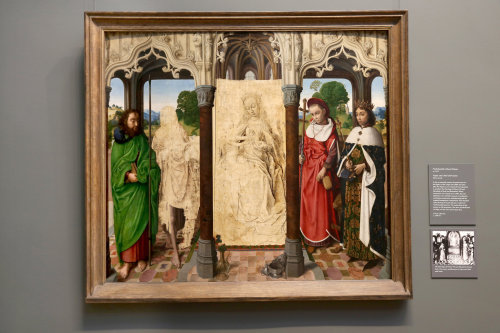
Students of painting often have trouble with drapery, especially when it has any sort of pattern or embellishment. I think the difficulty comes from trying to tackle it all at once. An unfinished painting by an unknown Flemish Master at the Met is instructive. The Flemish Master doesn't bite off more than he can chew, and so paints it in stages, accomplishing the value first in the grisaille.  Second comes the color, and finally the pattern. When I paint I accomplish the color and value in one go. After that is dry, I create the pattern, although during this stage I make continued use of the base color. This is useful for promoting overall unity in the fabric.

Tuesday, March 4, 2014

Kahnawake Wampum Belt

Reproduction of the Kahnawake Wampum

In one of his best known books, the historian Ernst Gombrich wrote that "There really is no such thing as Art. There are only Artists." It is later generations that will decide the important works human craftsmanship. Moreover, judgements are subject to revision. Anyone familiar with the life and work of Johannes Vermeer or Rembrandt will no doubt be familiar with the vicissitudes of an artist's notoriety. So to speak of the Art of the Mohawk is difficult because the artwork they created was not intended to be conceived in the way a western European conceives of a Rodin, or a Picasso.

That is not to diminish the beauty they created. Their artwork was meant to be experienced intimately. Their creations gave color and joy to the life of the community. Consider the wampum belts made by the Haudenosaunee. These were not merely decorative. They formed an important part of clan, tribe, and league diplomacy. Early communications between the Mohawk and the Dutch describe a wampum belt that ties the two societies together.

In 1677, the Mohawks of Kahnawake were given a wampum belt by the Hurons of Lorette. The belt was given, according the the Jesuits, as an encouragement to the faith of the Mohawk community. Iconographically, it is important because it marries the symbolism of European Catholicism with Haudenosaunee tradition.


Saturday, February 15, 2014

Abstractions


The most difficult thing about this painting has been the complexity of the clothing. In the mission village of Kahnawake, the Mohawk and Huron populace wore garments acquired through trade with the French. The blouses and shirts would have fit very loosely. Clothing my models in similar garments helps me to better capture the period look, but billowing fabric can easily obscure the shape of the figure. For it to make sense in a painting, the complex folding and twisting of the garment has to be simplified into something relatable. In the image above you can see how the painting is developing, and how I use the underdrawing and dead-coloring to highlight the key forms in the fabric.

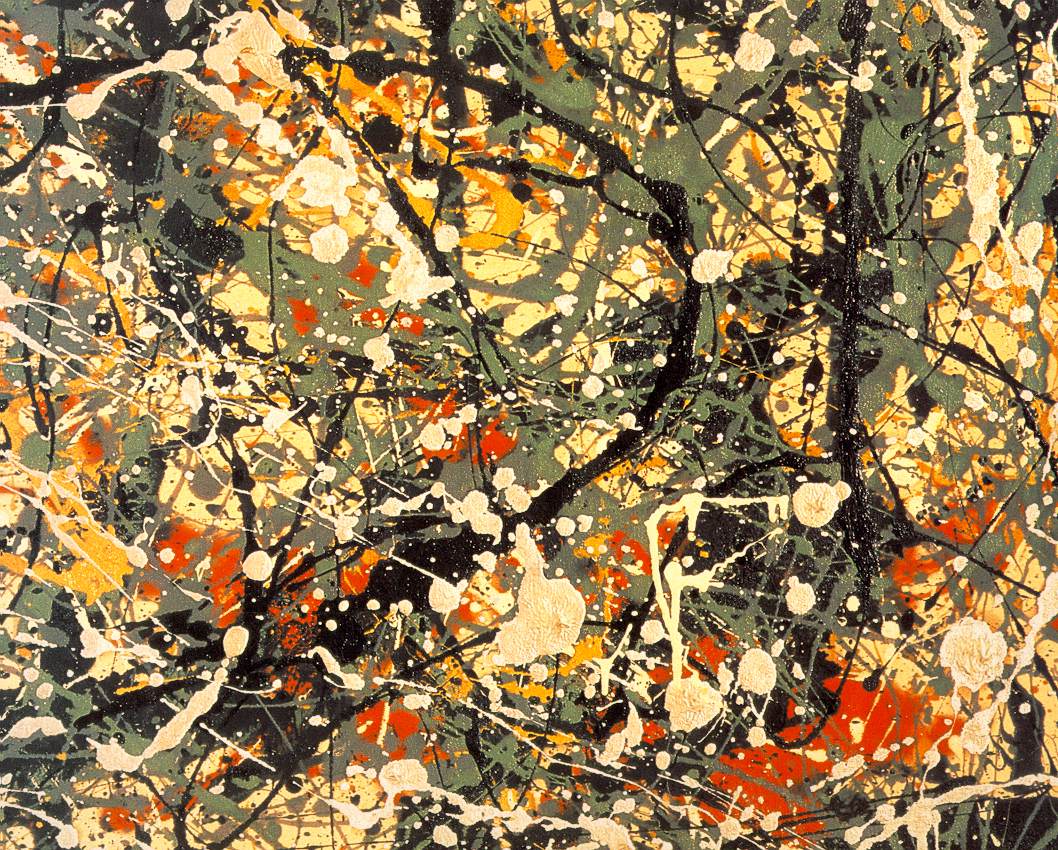
That process of simplification is called abstraction. The term typically calls to mind cubist paintings by Braque and Picasso, or non-objective works by Hans Hofmann, but it encompasses a wide spectrum of work. Proponents of Abstract Expressionists Pollock and De Kooning argued that the antecedents of their work could be found in the work of Vermeer and Velazquez. That sort of historical continuity was very important in the middle of the 20th century, when art was seen as an "onwards and upward" process, but today it's less important to critics. It is, however, extremely relevant to painters. To be able to identify the key components of a complex form, and abstract them on the canvas is the skill that makes successful representational painting possible.

Wednesday, January 22, 2014

Kahnawake Furniture


One challenge I ran into between finalizing the sketches and setting up the models has had to do with proportions. When I make sketches I can pose the human body in whatever way I want, but real human beings don't work that way. Comfort and usage result in narrower ranges of motion. When it came time to pose my models I realized that if I wanted St. Kateri and the girl in the planned arrangement, then St. Kateri's legs would need to bend in some miraculous ways, or the girl would need to be much younger. The solution I settled on was to have St. Kateri sitting on something.

This, of course, resulted in another problem: upon what does she sit? Or, more to the point, upon what would a woman living in a late 17th century Canadian mission village sit? That called for more research. I initially thought I'd find something with three legs: it seemed simpler and much easier for the carpenter to level. So I was very surprised that the vast majority I looked at were four legged. I don't think I found a single three legged stool from earlier than the 18th century. That's not to say they weren't made. It could be the case that they just haven't survived to make it into museum collections. Maybe they were so common that no one preserved them, or so poorly made that they well apart. But rather than take a risk by trying to paint something I haven't seen, I kept looking for something from the right location and dated to the right time period.

I found something plausible to paint in the collection of the Musee de la Civilization in Quebec City. The stool in question came from a farm in the Quebec Province, and has been dated to early 1700's . It's simplicity and functional appearance make it an excellent fit. It is plausible that the residents of Kahnawake could have made this stool, or traded for it. The image above comes from the museum's online archive.

Saturday, December 21, 2013

Christmas at Kahnawake

With Christmas just around the corner, Katria challenged me to write about the holiday as St. Kateri would have know it.

Christmas in the 17th century was a controversial subject. To British and American protestants, the holiday was seen as mildly "papish" or at worst, a pagan holdover with echos of solstice bonfires and Asiatic tree worship. It wasn't really until Dickens popularized the holiday in A Christmas Carol and the Germanic Queen of the United Kingdom, Alexandrina Victoria of Saxe-Coburg-Saalfeld, and her consort, Prince Albert of Saxe-Coburg-und-Gotha, erected their own Christmas tree, that the Protestants warmed to the practice.

The Dutch, being accustomed to a multicultural (that is, composed of catholic and protestant elements) society, were known to celebrate the holiday in their colonies in the Americas. Although, for them, the festivities usually occurred around the feast of St. Nicholas--or Sinterklaus--in early December. Anyone who is familiar with the writings of David Sedaris will know that this is still the Dutch custom. Some aspects of their December festivities are generating controversy today.

Catholicism has a rich history in Canada and the French Catholics in Quebec were more inclined to celebrate the Nativity of the Lord on December 25th in greater splendor than the adjacent feast days. "Christmas" is a contraction of Christ's Mass in old and middle english. The OED first records it in 1038 as Crīstesmæsse. So you won't find that word in any of the non-english primary sources. In Quebec the holiday was referred to as Noël. While I don't have specific details about any Noël celebrations during the time St. Kateri was at Kahnawake, I have been able to dig up a record of Christmas celebrations involving Jesuit missionaries, French settlers, and the Plains tribes of present day Michigan.

Histoire des Canadiens du Michigan et du comté d'Essex, Ontario
For those of you who don't parler français, here is a paraphrase of the relevant passages:

In 1675 Father Pierre Bailloquet came to the mouth of the Saginaw River, where he built a chapel--the first built by Christians in lower Michigan--where he celebrated the feast of Noël in splendor. "Having a small crib next to our altar," he said, "our christians came at midnight and during the day. They caused these forests to resound with their hymns in honor of the newborn Jesus . What a joy for us, at the midnight mass and during the day, to see the child Jesus recognized by the Indians in this country" 

Being a dutch and german invention, Santa Claus was absent, as was the exchange of gifts. While their celebration was much simpler than what we know today, there are many similarities. We know that they celebrated with hymns and songs, and decorated the chapel with a rudimentary nativity scene. They even held a midnight vigil mass, although the lack of reliable clocks may have made timing less than exact.

Regarding the hymns they sang, I haven't had much luck in locating a Jesuit missionary hymnal from North America. They must exist, since the jesuits travelled with books of homilies and prayers in phonetic transcriptions of the languages of the Native Americans. Since I don't speak french, research is cumbersome as I translate terms back and form. I do have a one hymn to share with you, written circa 1641 by the missionary Jaques Brebeuf at Sainte-Marie-au-Pays-des-Hurons in Ontario. It is now known as 'Twas the Moon of Wintertime, but in the original Huron it was known as Jesous Ahatonhia (Jesus he is Risen). The song has the distinction of being the first North American Carol. Bruce Cockburn recorded a version of the song in Huron. List to it here

It is difficult to know what hymns they would have sang at Kahnawake, but since the community included Mohawk and Huron, this song will at least convey the sound of the language that may have been heard at their celebrations. Merry Christmas.


Tuesday, December 3, 2013

French Fashion Part II


Male Iroquois dress traditionally consisted of pieces similar to female clothing, but in a much more minimal fashion. The drawing above, made in the late 17th- or early 18th-century depicts two men in the lower left corner.  Leggings, Moccasins, and a Skirt or Loin Cloth covered the lower limbs. The torso was most often bare. When an upper garment was worn, it took the form of sashes, blankets, or other loose drapery. Despite the matriarchal nature of Iroquois society, the patriarchal conventions of European business and diplomacy meant that male members of the tribes and clans would deal with the English, French, and Dutch. Rather than dress in an entirely European manner, they would adopt garments that could be altered to suit their own uses and aesthetics. In Verelst's early 18th-century painting of a dignitary from the Turtle Clan, the gentleman wears European garments that have been refashioned to reflect Iroquois convention.


In Kahnawake the Mohawk and the Huron lived with greater exposure to European culture. They were able to trade for a greater variety of material. Since the Iroquois in Chauchetiere's drawings are depicted in European garments, that has been my strategy with the second painting. St. Kateri Tekakwitha and a young girl will be clothed in material similar to what is worn by St. Kateri in Chauchetiere's portrait. The young boy will wear a loose, belted shirt and leggings.

Wednesday, November 27, 2013

French Fashion


One of the most tangible differences between life on the St. Lawrence, and life along the Mohawk would have been the greater access to European trade goods. The proximity to Montreal and Quebec city meant that the community at Kahnawake would have access to many more European materials. Their dress would have changed considerably. However, this difference is best understood in terms of style, rather than substance. The mohawk were quick to adopt European material, but they put it to their own uses and modified it as needed. The trade shirt is an example of this. In the portrait painted by Chauchetiere we see St. Kateri clothed in such a garment. We also see women wearing shirts and blouses of a more european design in Chauchetierre's drawings of Kahnawake and in Verelst's paintings. Yet we also see evidence of the modification of this clothing with traditional mohawk beadwork. While many of the traditional patterns and symbols are evident, in some cases even the beadwork seems to have changed.  It is Dr. Betty Duggan's contention that the Kahnawake doll in the collection of the British Maritime museum, exhibits a pattern that has been influenced by french decorative conventions. It is possible to discern something resembling a fluer-de-lis.

From the drawings and from the doll, it seems clear that female dress remains similar: composed of the same key pieces, and changing in its style. But what about male dress? or children? The second painting will feature St. Kateri with a male and female child. More next week on fashion tips from the historical record.

Tuesday, November 19, 2013

Kahnawake

© Archives Departementales de la Gironde, Bordeaux

The second painting, St. Kateri Tekakwitha and the Children, will be set in the Mohawk community on the St. Lawrence River in Canada, Kahnawake. We know considerably more about the mohawk from that community than we do about the communities along the Mohawk river. Even images, like this drawing by Claude Chauchetiere, have been preserved. Purely as aside, it is interesting to note that Chauchetire's drawings are considered the most historically accurate visual material from this period. Since nothing else comes close, I've relied on his drawings more than anything else. One of the ten he is known to have made appears above. So often drawings are reproduced in greyscale, but to do so here would rob you of the opportunity to appreciate the warm brown ink he's using. I've speculated about the nature of his ink. It's too red to be a sepia. I wonder if it might be a walnut ink. 

This, and his other drawings convey a wealth of information about life at the mission. Chauchetiere makes clear the sort of structures in which the members of the village lived. The buildings were built in the manner of the traditional long house, but the design was more European. In the Mohawk Valley the building would have had a rounded roof at this time, but here the roofs are triangular. They have a simple entrance and few windows to let in the light. The artist also includes important details about clothing. Both men and women wore moccasins and leggings. The male skirt (the individual on the left holding the gun)--which evolved from a breech clout--is shorter and plainer than the female skirt (center) Since it is winter, they wear snowshoes, and wrap themselves in furs.