Showing posts with label Liturgy and Art. Show all posts

Friday, April 18, 2014

Good Friday

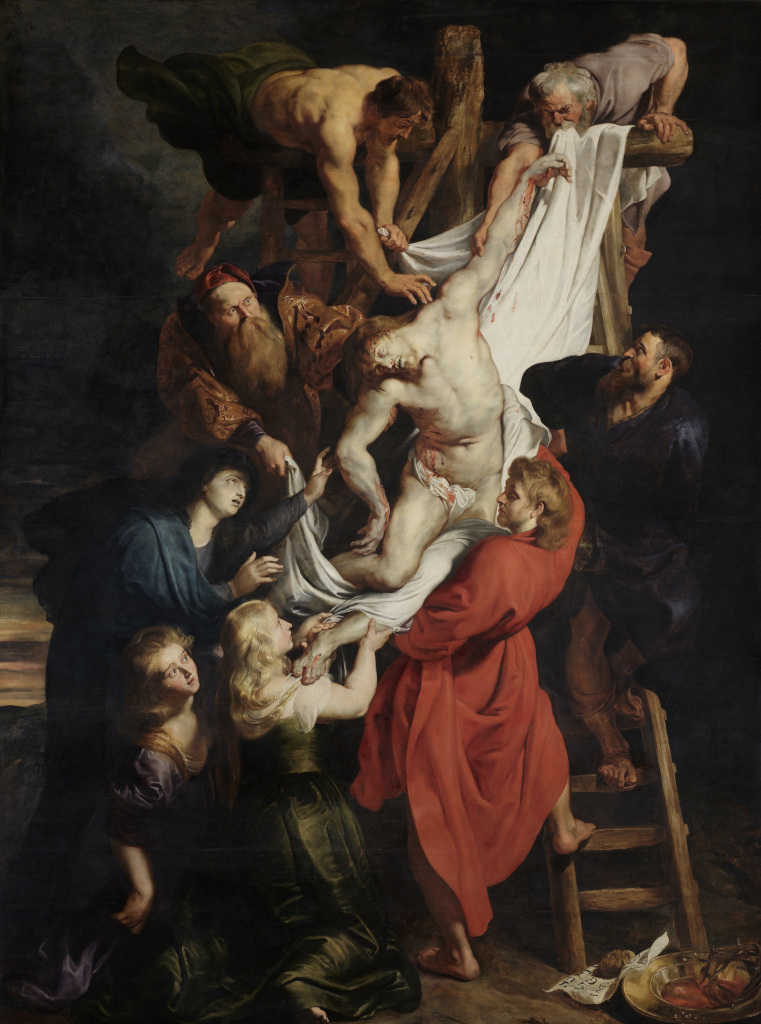
Rubens' Deposition
A theme throughout lent is the paradoxical freedom that comes from renunciation. The life in death. It's a theme that runs throughout Christianity, and indeed all contemplative faiths. So for Good Friday, I'd like to dwell upon that, and better than my own words are those of T.S. Elliot in this fragment of "East Coker" from the Four Quartets:

The wounded surgeon plies the steal
That questions the distempered part;
Beneath the bleeding hands we feel
The sharp compassion of the healer's art
Resolving the enigma of the fever chart

Our only health is the disease
If we obey the dying nurse
Whose constant care is not to please
But to remind of our, and Adam's curse,
And that, to be restored, our sickness must grow worse.

...

The dripping blood our only drink,
The bloody flesh our only food:
In spite of what we like to think
That we are sound, substantial flesh and blood
Again, in spite of that, we call this Friday good.


Saturday, March 8, 2014

Liturgy and Creativity

Witold Wojtkiewicz, Meditations Ash Wednesday 

Creative thinking isn't the ability to make a painting, sing a song, or write a play. It's the ability to find a solution to a problem in an unexpected place. The appreciation of beauty--regardless of the context--is an important component of creative thinking. We see it in nature, hear it in music, but there is also beauty in math and the well-turned phrase. I remember being very young and knowing God as a very beautiful thought. That beauty is expressed in our churches through the liturgy of worship.

With Ash Wednesday behind us, we've entered a new liturgical season. The solemnity and quietness of Lent makes Easter all the more exciting.  John Kebble's poem expresses the journey through the season:
...let us keep our fast within / Till Heaven and we are quite alone...
The liturgical calendar provides a rhythm to life and has served as rhythm to creativity as well. The cycle of the Stations of the Cross has as rich a visual history as it does liturgical. The Mysteries of the Rosary provide is another. One of the best example of this series can be seen in the Sint-Pauluskerk in Antwerp. It features Rubens' Flagellation and Van Dyk's Bearing the Cross, among many other paintings. The scale and drama of the work draw in the viewer and encourage a level participation that words often fail to invoke. In terms of dramatic beauty, it's hard to out-do Rubens. But there are two paintings by Velazquez, made in competition to two works by Rubens. But Rubens' flair for the dramatic is hammy in a single figure. The Spaniard's storytellers however, Aesop and Menippus are quietly and stately beautiful in the way a single figure should be. It's this contemplative beauty that Lent brings to the liturgical calendar.